







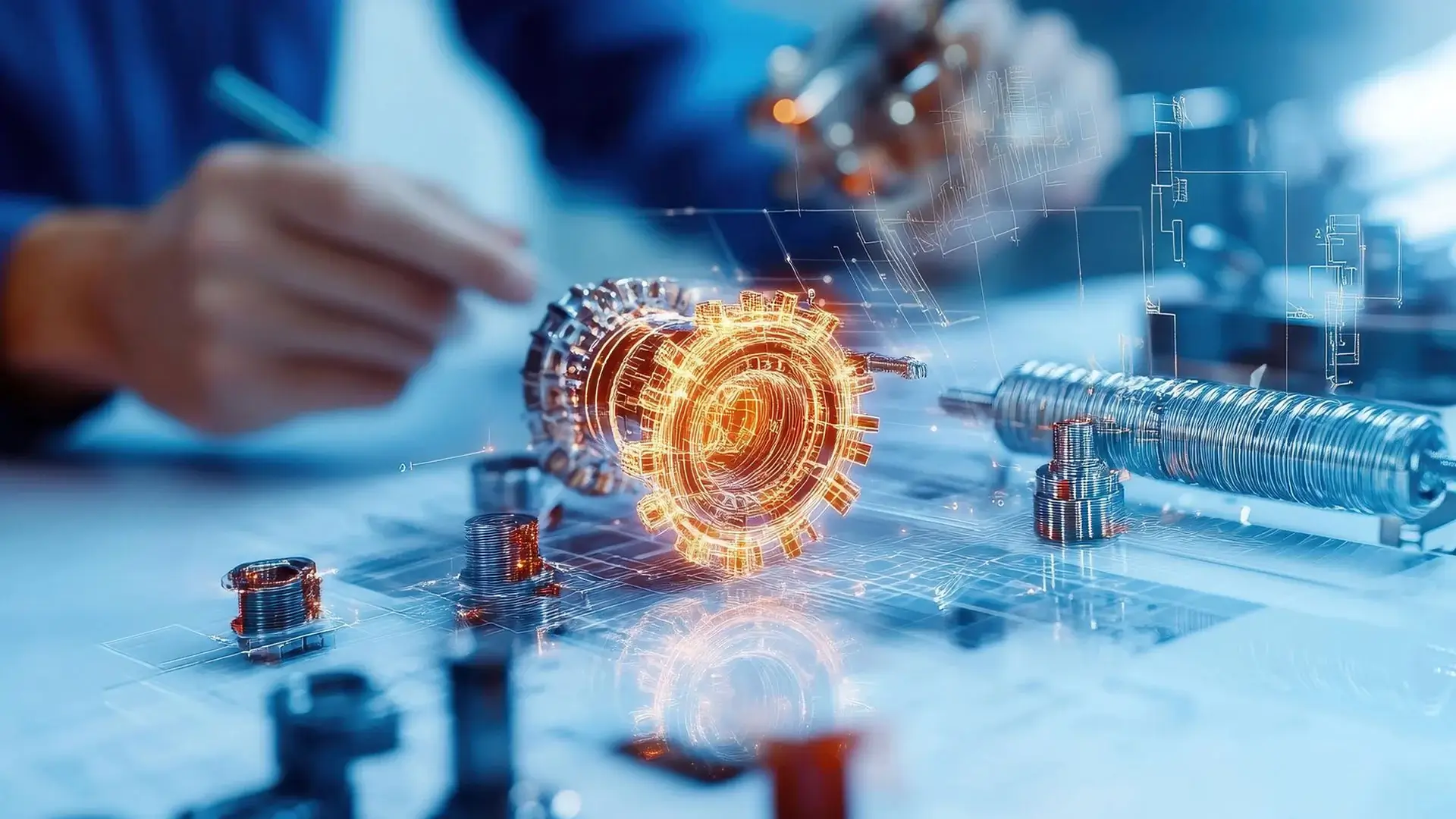
Reverse engineering services in the industrial sector have turned into one of the strategic assets that manufacturers, OEMs and engineering companies are using to enhance legacy systems, recreate their out-of-production parts or boost innovation. At a time when industries focus on automation, digital transformation, and precision engineering, which causes global competition, reverse engineering offers an organized approach to the analysis, reshaping, and improvement of existing products.
In this article, you will explore the nature of industrial reverse engineering services, their operation, the main advantages, industries that can use them and how to select the appropriate service provider.
What Are Industrial Reverse Engineering Services?
Industrial reverse engineering services are operations that entail dismantling and examining a physical part, assemblage, or system that is in a current condition with the view of familiarizing with its design, materials, size, and functionality. The aim is to reproduce, enhance or electronically record the product without having access to the original design files or technical drawings.
Reverse engineering is usually applied in the manufacturing setting when:
- There are no original CAD files.
- One of the suppliers was discontinued.
- The documentation of equipment is obsolete.
- There is a need of performance optimisation.
- There will be a redesign or upgrade of the product.
It usually involves 3D scanning, CAD modelling, material analysis and technical detailed documentation. Reverse engineering based on the application of modern technologies including laser scanning, coordinate measuring machine (CMM), and parametric modelling software is used to provide high precision.
Industrial reverse engineering, in contrast to simple replication, is concerned with accuracy, compliance and functional enhancement. The final product is not only a replica of a part but a tested, production digital model.
How Industrial Reverse Engineering Works
The knowledge of the workflow assists in explaining the way of how the professional reverse engineering services provide accurate and trustworthy results.
- The first step of engineers is to examine the physical part or system in order to assess the wear, complexity, geometry, and material properties. This phase determines the scope of the project and finds out the possible obstacles.
- The 3D geometry of the component is measured by high-resolution 3D scanners or CMM machines. This generates a point cloud or mesh file of the precise size of the object.
- The scanned data is translated to form a parametric CAD model by the use of sophisticated software. Surfaces are rebuilt, tolerances are established and dimensional integrity is enforced by engineers.
- Testing of materials can be done to determine alloys, coating, or composite. Stress analysis and simulation tools are able to determine performance at operational conditions.
- To test fit, functionality and compliance, a prototype can be produced. They make changes prior to final production documentation being provided.
This methodological tact is when the reverse-engineered components are according to the industry standards and functioning demands.
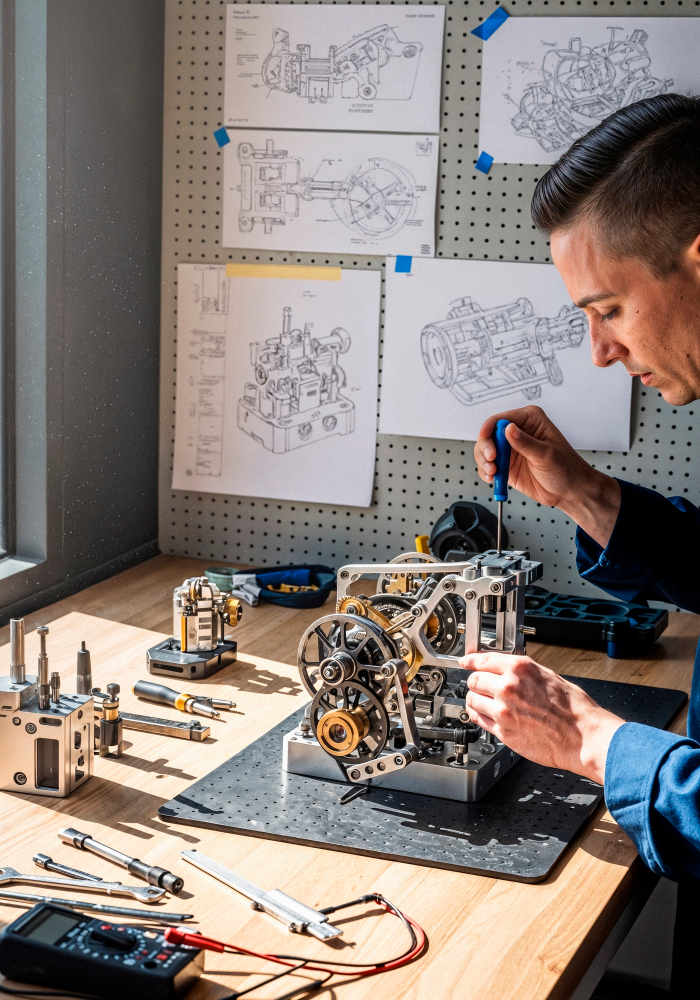
Key Benefits of Industrial Reverse Engineering Services
Reverse engineering in industries has quantifiable benefits to organisations in the manufacturing, aerospace, automobile, energy, and heavy equipment industries.
Why have these services become an indispensable part of the modern manufacturing process, let us see why?
- Old machinery is usually based on outdated parts. Reverse engineering enables the companies to recreate these parts and eliminate expensive equipments replacement.
- Failure to provide critical parts in a short time can lead to delays in the production process as OEMs may take time to supply them. The concept of reverse engineering facilitates quick production of vital components.
- It is possible to recreate components locally or optimize designs to cut down the cost of procurement and operation particularly in cases where the original suppliers are offering high prices.
- In the reverse engineering process, engineers will be in a position to improve on weak points, better material choice, and durability.
- Numerous facilities that are older do not have updated technical drawings. Reverse engineering produces proper CAD records of future production and service.
- sadsadadd
These advantages render reverse engineering to be an effective solution to organisations who want to modernise the operations without necessarily changing the whole systems.
Industries That Rely on Industrial Reverse Engineering
Reverse engineering is important in various high value industrial sectors.
Aerospace and Defence
Aircraft parts, turbine blades, and structurals tend to need replications and analysis to ensure that compliance and performance standards are upheld.
Automotive Manufacturing
Reverse engineering finds application in automobile manufacturing companies to redesign products, enhance efficiency and competitor product analysis.
Energy and Power Generation
Legacy systems cause the power plants to rely on the old systems where they might not find replacement parts. Reverse engineering preserves the continuity of operations.
Heavy Machinery and Industrial Equipment.
In mining, construction and manufacturing equipment replacement parts are often customised.
Oil and Gas
Valves, fittings and mechanical parts are frequently highly specialised and need to be reproduced precisely to ensure safety and performance.
In all these industries, accuracy, conformity, and integrity of materials are very important–and it is therefore vital to have professional reverse engineering services.
How to Choose the Right Industrial Reverse Engineering Service Provider
The success of your project depends on the process of choosing the appropriate service provider. Take into consideration the following criteria:
- Find suppliers that have served in your industry and one that understand complicated geometries and intricate precision components.
- Make sure the firm has the 3D scanners, CMM, and professional CAD software which are of high resolution and ensure the modelling is accurate.
- A quality control will be undertaken by a reputable provider through dimension verification and tolerance verification.
- In the case of regulated industry, make sure that the provider is aware of ISO standards, material certifications and documentation.
- Speed is an issue in the industrial context. Select a service provider with the ability to provide quality outcomes within strict deadlines.
A trusted reverse engineering partner does not simply copy a part, he/she assists with the future protection of your processes.
The Role of Digital Transformation in Reverse Engineering
Current industrial reverse engineering services are closely related to digital manufacturing efforts and Industry 4.0 efforts. Organisations can convert physical components to digital assets and:
- Build digital twins
- Allow predictive maintenance.
- Streamline supply chains
- Enhance product lifecycle management.
- Combine with additive manufacturing and CNC machining.
Quick prototyping, 3D printing and tailored manufacturing plans are supported by reverse engineering. Digital modelling is gaining more and more importance as companies embrace automation and smart factory technologies.
The combination of AI-based modelling tools and highly developed simulation software contribute to further accuracy and accelerate design validation. This development makes reverse engineering a strategic engineering field as opposed to a responsive maintenance fix.
Conclusion
Industrial reverse engineering services offer a methodical and technology-based method of examining, replicating as well as enhancing tangible elements. Reverse engineering provides tangible operational and financial advantages to extending the life of legacy equipment and also facilitating digital transformation initiatives.
Using sophisticated 3D scanning, CAD modelling, and material analysis, manufacturers will be able to minimise downtimes, optimise performance as well as comply with the industry standards. Reverse engineering is still a formidable tool to maintain value as industries modernise to become innovative.
Industrial reverse engineering services nowadays are not an option to organisations that want to be precise, efficient, and have a competitive advantage.
Looking to modernise legacy equipment or recreate critical components with precision? At Seashore Solutions, our website showcases advanced Industrial Reverse Engineering Services designed to deliver accurate CAD models, performance optimisation, and reliable engineering solutions to support sustainable industrial growth.
Engineering Excellence. Powering Performance.
Get reliable, high-performance mechanical engineering services—from design and analysis to prototyping and production support—delivered with precision, efficiency, and scalability.