







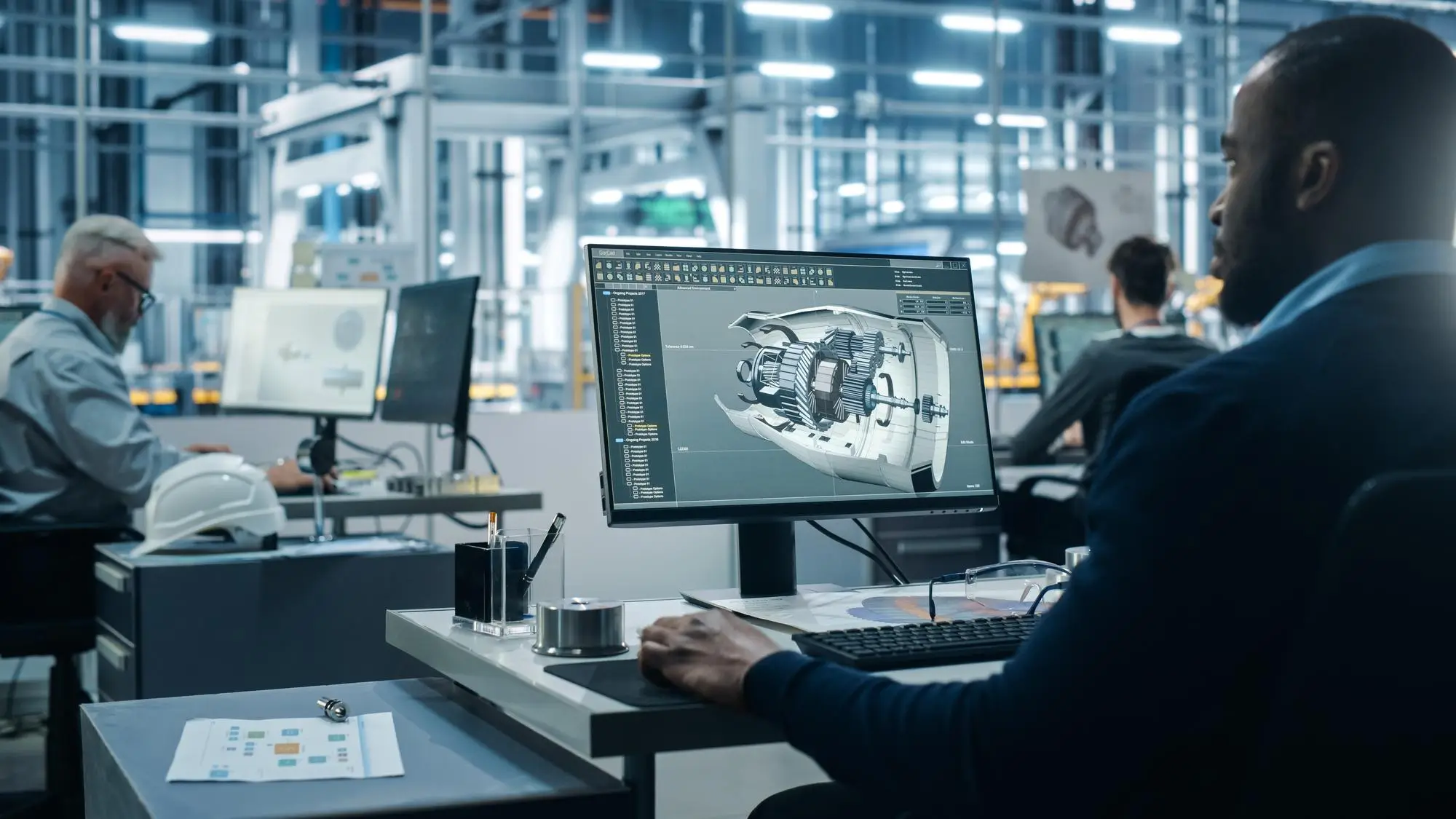
The heavy industry machinery works in the conditions where failure is not a matter. These machines are required to perform extreme loads, high temperatures, vibration and constant work schedules whether mining excavators, hydraulic presses to large scale turbines and material handling systems. Such demanding conditions do not render design optimization as an improvement strategy, but as a necessity.
Engineering has long since outgrown the practice of trial and error prototyping. Currently, with sophisticated simulation, algorithm based optimization and multi-physics modeling, engineers can optimize designs at a computer level to perfection, prior to actual manufacturing. This method minimizes time wastage, lowers the costs of production, enhances safety levels, and increases the life of the equipment’s.
Here, in this blog, we will discuss some of the six effective design optimization methods that are transforming the manufacturing of heavy industrial machinery and enabling companies to gain a higher rank in terms of performance, efficiency and reliability.
Why Design Optimization Is Critical in Heavy Industrial Machinery
The heavy industrial machineries work under the complicated mechanism, thermal, and dynamic loads. The conventional designing strategies usually depended on the conservative safety consideration that multiplied weight, material wastage and energy consumption. This was not an efficient but a safe way.
Design optimization is aimed at attaining:
- Adequate structural integrity.
- Smallest possible material use.
- Lower energy consumption of operations.
- Increased longevity and wearability.
- Improved manufacturability
As competition grows, and the environmental laws become more stringent, what manufacturers need to do is to make machines lighter, stronger, smarter and less expensive. This is possible using optimization techniques that are a result of data-driven engineering decisions.
Best Design Optimization Techniques for Heavy Industrial Machinery
Optimization in heavy industrial machinery integrates simulation, algorithms, and specialized methodologies. Below are the most advanced and impactful techniques used in modern engineering.
Advanced Simulation-Driven Structural Optimization
Finite Element Analysis (FEA) is the first step in structural optimization and involves the modeling of loads, stress, and deformation, and failure points. Simulation-based optimization assesses thousands of design variations virtually instead of experimenting with several prototypes physically.
Key techniques include:
Topology Optimization
It is the technique that eliminates horizontal material within the structure, yet structural integrity remains intact. It determines load paths, and only allocates material where necessary. The outcome is lighter, equally or better strong elements.
Shape Optimization
After the topology is determined, shape optimization modifies geometry to minimize stress concentration areas. Contour adjustments, smooth transitions and fillets can greatly increase fatigue life.
Size Optimization
This is concerned with maximizing thickness, cross-sections and dimensions to give balance between strength and material efficiency.
Structural optimization based on simulating results in lower costs of materials, better load-bearing capacity, and increased machine life, without jeopardizing safety.
Multi-Physics and Dynamic Analysis
Static loads do not occur only in heavy machines. It experiences vibration, thermal expansion, interaction with fluids and occasionally electromagnetic forces. Multi-physics modeling combines all these aspects into a single analysis.
Thermal-Structural Coupling
Thermal variation in one of the systems such as an industrial furnace, a turbine, or a hydraulic press directly affects structural performance. Thermal expansion may lead to the development of stress and misalignment. These interactions are forecasted by multi-physics simulations prior to production.
Vibration and Modal Analysis
The large rotating machinery type is subject to resonance threats. Modal analysis determines the natural frequencies and avoids amplification of vibrations that may lead to disastrous failures.
Fluid-Structure Interaction (FSI)
Hydraulic systems, pumps and heavy compressors are based on fluid flow. FSI analysis assures structural elements against internal stress and vibrations caused by flow.
Engineers can develop machinery that works effectively in the real world by integrating several physical behaviors into one model.
Modern Optimization Algorithms
Conventional engineering changes are gradual. The algorithmic methods of optimization consider thousands of design combinations (or millions, as it happens) to identify the most appropriate solution.
Genetic Algorithms (GA)
Genetic algorithms were based on natural selection and are generated through successive evolution that is guided by the most efficient combinations of design parameters.
Gradient-Based Optimization
These are algorithms which quickly vary design variables to achieve the best performance objectives in a mathematically precise manner.
Multi-Objective Optimization
The design of heavy machinery can be faced with the trade-offs of weight, cost, strength and manufacturability. Multi-objective optimization determines a balance of the solutions as opposed to concentrating on a single parameter.
AI and Optimization based on Machine Learning
Machine learning algorithms look at previous performance data and predict the most optimal settings. These systems minimize the design cycle time and increase predictive accuracy.
Optimization, which is powered by algorithms, enhances innovation and shortens product development cycles by a long way.
Specialized Methodologies in Industrial Machinery Optimization
Some of the methodologies are specifically constructed to be used in heavy industrial applications with complicated and large-scale applications requiring specific methodologies.
Design for Manufacturability (DFM)
The optimization should be taken into consideration on how the components are going to be produced. Streamlined weld joints, assembly modules and standardized components lower the cost of production and lead time.
Design for Reliability (DFR)
This philosophy is a combination of reliability engineering concepts that are used to reduce the failure frequencies. The key role is played by fatigue life prediction and failure mode analysis.
Fatigue and the Life-Cycle Optimization
The heavy machinery parts undergo stress cycles. Fatigue optimization embodies a means of providing materials and geometry with the capability of enduring operating loads.
Optimization of Additive Manufacturing
As industrial scale 3D printing becomes feasible, engineers will be able to create complicated internal structures that would not have been possible to create otherwise. Optimization methods take advantage of this freedom to give strength to weight ratios.
Dedicated methodology also makes sure that the designs are not only optimized in order to perform, but also will be viable to manufacture and use over an extended period.
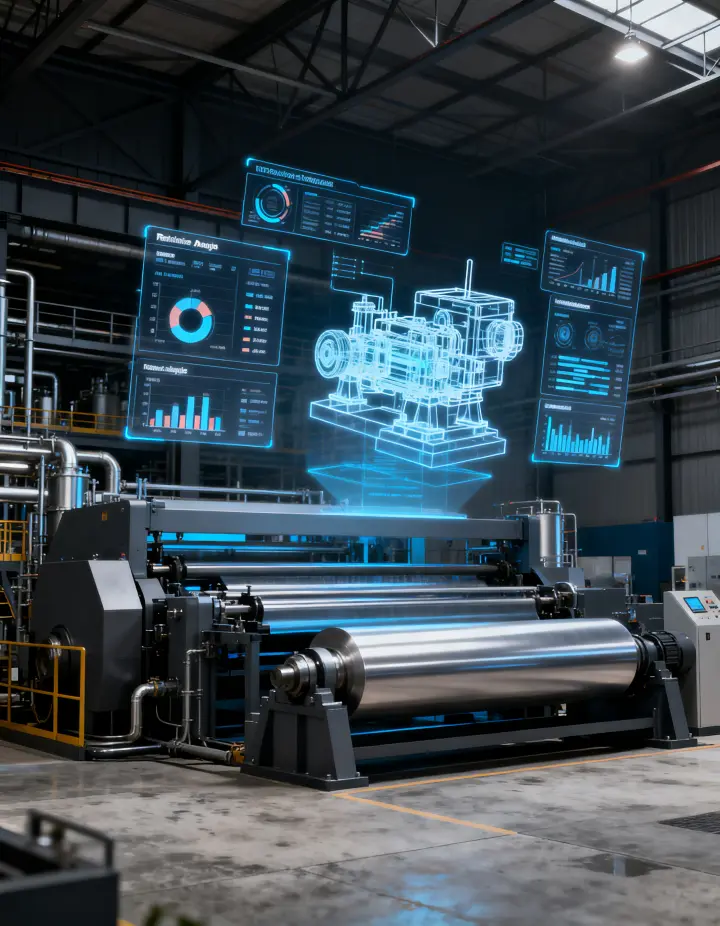
Digital Twin Technology and Real-Time Optimization
Digital twins are a new solution to the work of heavy machinery. A digital twin is a computer representation of an actual machine that is made real-time through sensor inputs.
Engineers by attaching IoT sensors to machinery can monitor:
- Stress distribution
- Temperature changes
- Vibration levels
- Energy consumption
This information contributes to simulation models and goes on to optimize continuously even after deployment.
Predictive maintenance, minimized unforeseen downtime, and future information about design optimization are some of the advantages of digital twin systems. Manufacturers do not respond to failures but instead they upgrade machine performance over its life cycle.
Material Optimization and Lightweight Engineering
The choice of materials is very important in the performance of heavy machines. Optimization methods assist engineers to choose the materials with a compromise between strength, durability, cost, and sustainability.
- Technologically advanced alloys save weight without losing structural integrity. Composite materials are finding application in certain industrial applications where they are required to show corrosion resistance.
- Optimization software considers other material options that are more economical in performance or weight.
- Due to the increasing concerns about the environment in the world, manufacturers strive to minimize the carbon footprint. Waste and energy consumption is reduced with the optimized use of material.
Lightweight engineering cuts transportation cost, energy consumption during operation and load on assisting parts.
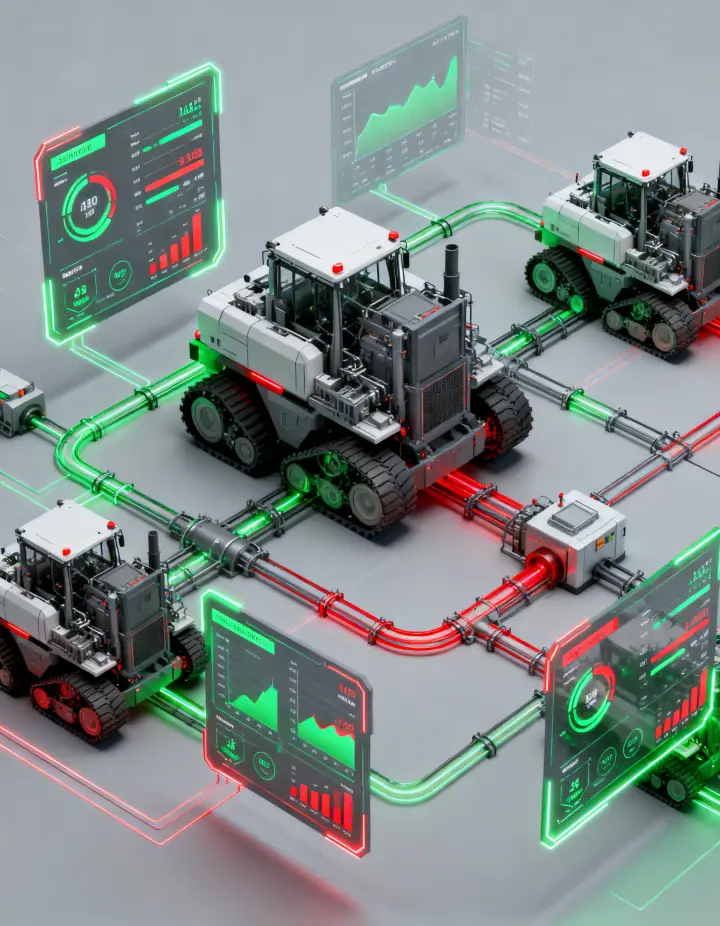
Integrated System-Level Optimization
Massive industrial machinery hardly works as an independent unit. There are systems like cranes, presses, mining rigs and power generators that are composed of interconnected subsystems.
System-level optimization evaluates:
- Structural components
- Hydraulic systems
- Power transmission units
- Control systems
- Cooling mechanisms
Engineers do not consider the optimization of individual parts separately, but instead examine the impact of alterations in one subsystem to the performance of the whole machine.
For example:
- Reducing component weight may lower motor load requirements.
- Optimizing hydraulic efficiency can reduce energy consumption.
- Improved structural stiffness may enhance precision and productivity.
This holistic design is used to guarantee optimum operational efficiency and smooth integration of subsystems.
The Future of Design Optimization in Heavy Machinery
Designing heavy industrial machinery is also the future of automation, a combination of AI, and sustainable engineering. With new technologies like generative design, software can be used to generate optimized geometries depending on load conditions and manufacturing constraints.
At SeaShore Solutions, we help transform complex industrial concepts into high-performance, production-ready machines using simulation-driven design, advanced engineering expertise, and practical solutions that improve reliability, efficiency, and long-term operational success.
Simulation platforms are also being done on clouds and thus it is decreasing the time taken to compute which is encouraging collaborative design in teams with global teams. In the meantime, artificial intelligence is ever-developing predictive models based on actual machine data.
With industries requiring smarter and safer equipment that is more environmentally friendly, design optimization methods will be even more of a focus of the competitive edge.
FAQs
What is the most effective design optimization technique?
The most effective technique combines simulation-driven structural optimization, multi-physics analysis, and algorithm-based methods. This integrated approach identifies stress points, evaluates real-world conditions, and refines designs for performance, cost, and durability, delivering highly efficient and reliable industrial machinery.
How does multi-physics analysis improve machinery reliability?
Multi-physics analysis improves reliability by simulating interactions between thermal, mechanical, fluid, and vibration forces. It helps engineers detect hidden issues like thermal stress or resonance early, reducing failure risks and ensuring machinery performs safely and efficiently under real operating conditions.
What role do digital twins play in optimization?
Digital twins provide real-time data from operating machinery to continuously refine design models. They enable predictive maintenance, performance monitoring, and ongoing optimization. This reduces downtime, improves efficiency, and helps engineers enhance future designs using accurate, real-world performance insights.