







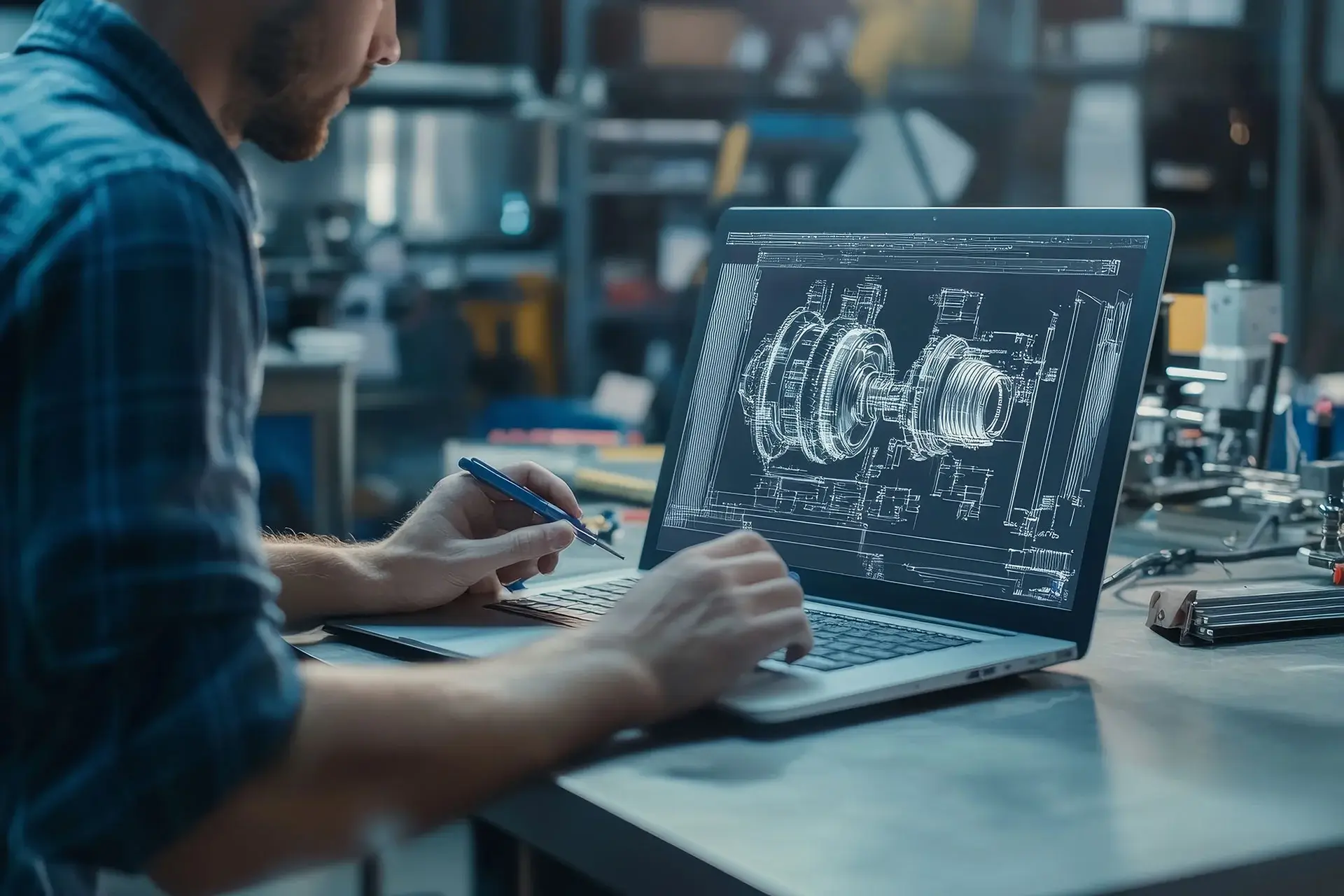
Over the last few decades, there has been a major change in manufacturing. Previously, manufacturing was mainly using manual machines, general machines and a lower level of customization. With the development of industries and the necessity to make the market requirements more flexible, manufacturers had to have specific machines, which would suit their unique processes, volumes of production, and efficiency objectives.
This move culminated in the increased role of machine design and development services, which assists companies in designing tailored equipment to increase their productivity, minimize their operating expenses, and aid in automation. In the present day, it is essential that these services allow manufacturers to remain competitive due to the capability of combining innovative technologies, improving workflows, and increasing the speed of innovation.
This paper will discuss what machine design and development services entail, advantages of these services, critical issues, and role of services in ensuring long term success in manufacturing.
What are Machine Design and Development Services
Machine design and development services entail engineering services that apply to the design of specific machinery that is engineered to meet the requirements of the particular manufacturing needs. In contrast to the standard equipment, these services are aimed at developing machines which will match with specific production processes, performance objectives and operational issues. It is usually done through requirement analysis, conceptual design, detailed engineering, simulation, and prototyping in order to deliver efficient and reliable working.
Other areas covered in these services include automation, control systems and performance optimization. The providers assist manufacturers through sophisticated CAD tools and engineering analysis to create products, which are scalable and have high precision that in turn increases productivity, improve quality and benefits changing industrial requirements.
Core Components of Machine Design Services
- The concept of knowing what is needed in production and creating the first design concepts.
- Preparation of detailed CAD models, assemblies, and layouts of components.
- Adding sensors, robotics and control mechanisms to improve performance.
- Verifying the functionality of design prior to full scale implementation.
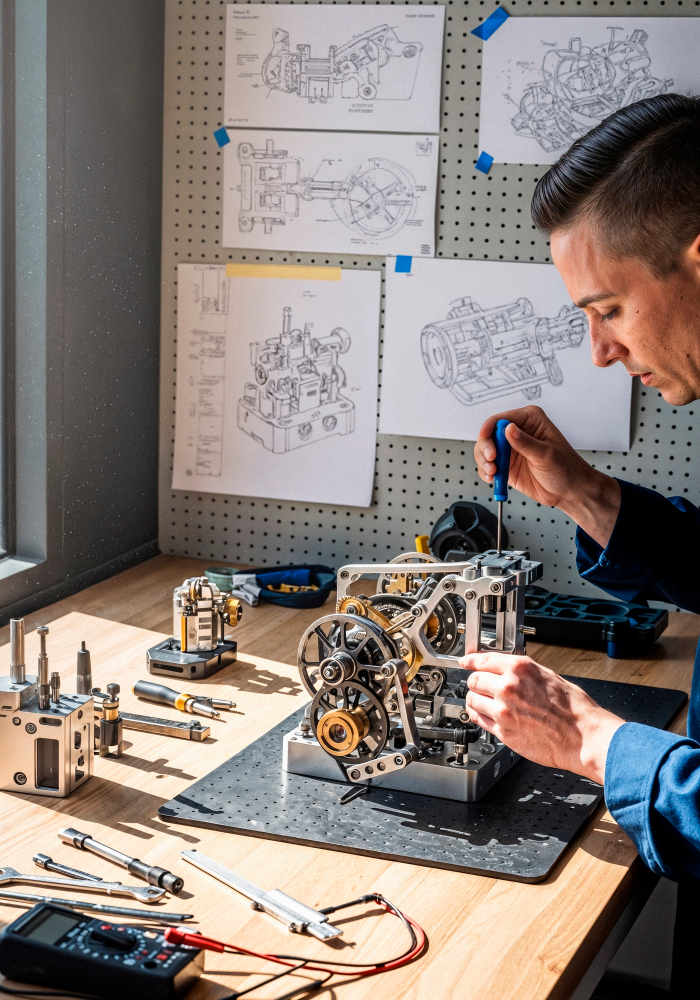
Why Machine Design and Development Matter for Modern Manufacturers
To satisfy the changing market needs manufacturers have to keep enhancing efficiency, flexibility, and quality of the products. The design and development of custom machines is important in realizing these objectives since it is capable of letting the businesses create equipment that will fit their particular production processes instead of using generic solutions.
Why have these services become an indispensable part of the modern manufacturing process, let us see why?
- Designed machines are planned to fit to the precise workflow needs, which in turn assist in eradicating production bottlenecks and decrease the amount of unwarranted human intervention. These machines can greatly enhance production by minimizing the time spent in a cycle and automation of repetitive duties, hence ensuring the efficiency of operation is constant.
- Customized machineries enable manufacturers to simplify very complex processes by matching equipment potential with production demands. This increases efficiency in the use of resources and minimized wastage of materials and enhanced synchronisation among various manufacturing cycle steps.
- Facilitates Automation Adoption:The modern machine design will embrace high-level automation systems including robots, sensors, programmable controllers, and smart monitoring. This assists manufacturers to be more precise, less reliant on manual effort and move to digitally linked manufacturing settings.
- The machines are precision-engineered, so their operation will be consistent and reduce the number of production errors and defects. This enhances not only the reliability of the products but also ensures that the manufacturers provide high quality products through high volume production.
Key Factors to Consider When Choosing a Machine Design and Development Partner
The choice of machine design and development vendor is a very vital choice that directly reflects on the efficiency of production, the long-term cost and reliability in operation. Custom machinery is a major investment and technical process and therefore manufacturers need to consider service providers that are not just about the basic services. An engineering partner is required to be well qualified not only to be conversant with the engineering requirements but also to be in line with the business goals, scalability requirements, and the adoption of future technology.
Experience and Knowledge in the Industry
The producer will have the right industry experience to know certain production challenges, safety standards, and regulatory requirements. This minimizes risks in designing and makes sure that the designed machinery is in line with the actual job needs.
Personalization and Customization Strategy
The manufacturers are to find partners, who are interested in customized solutions, but not in generic designs. Modular and scalable machine designs enable ease of upgrades and flexibility to production requirements.
Assurance Testing and Assurance Quality
Trustworthy suppliers adhere to the rigorous validation procedures, such as performance testing, safety inspection, and simulation. This would make sure that machines are running efficiently and of the required quality.
End to End Support and Collaboration
When selecting a partner, it is necessary to consider one who provides full life cycle support, including concept and design, and installation and maintenance, so that the project will be executed and successful in the long run.
Future Trends in Machine Design and Development Services
The development of machines and machine design is changing fast with the manufacturers adopting new advanced technologies in order to enhance efficiency, flexibility, and sustainability. Modern-day engineering entails more than merely mechanical functionality but is currently concerned with smart, networked, and information-driven machine approaches that are able to respond to evolving production requirements. With the shift of industries towards digital transformation, the services of machine design become more and more based on innovative tools and smart technologies to achieve higher performance, minimize downtime, and provide scalability of operations in the long-term perspective.
- The implementation of smart and connected machines is facilitating real-time monitoring, predictive maintenance, and decisions made based on data, giving manufacturers an opportunity to minimize unforeseen downtime and make equipment more effective as a whole.
- The use of technologies of integrating IoT with industrial automation is turning the existing machinery into smart machines able to exchange information with the other production units and streamline the workflow automatically.
- The higher application of simulation-based engineering is assisting designers in testing the performance of the machines virtually, lessening the development period, lowering the expenses of physical tests, and enhancing the accuracy of the design prior to manufacturing.
- The increase in the adoption of AI-driven optimization of design is enabling the engineering community to optimize the design of many scenarios within a short duration of time, increases the efficiency, reliability, and energy consumption of machines.
- Change to sustainable and energy-efficient machine design is also promoting use of environmentally friendly materials, low-power consumption systems and environmentally friendly manufacturing processes.
- Growth of modular and scalable machine architectures: Due to their development manufacturers can upgrade or even reconfigure equipment easily as the production needs change without necessarily having to replace the entire system.
Questions Manufacturers Should Ask Before Finalizing a Machine Design Partner
It is important that manufacturers pose the right questions to the machine design and development provider before choosing the one that fits in technical needs, as well as long term business objectives. These questions can be used to measure the knowledge, stability, and capability of a provider to provide custom solutions that can be scaled and support actually the production objectives.
- How many years have you been working with our particular industry? Knowledge of whether the provider has undertaken similar manufacturing environments would aid the evaluation of the familiarity of the operational issues, standard of compliance and performance expectations.
- How do you do customization and scalability? This makes sure that the provider can come up with the machines that may not only cater to the current requirements but can also be able to adjust to future changes in production.
- What do you do in terms of quality assurance and testing? Inquiring about validation processes will ascertain that the machines will be able to satisfy the standards of reliability, safety, and performance.
- Do you provide end-to-end and after-deployment services? Maintenance, upgrades and technical support are long term requirements of successful operational success.
- What do you do to make sure that there is a smooth integration with existing systems? This assists in the determination of the new machinery whether it will be effective in the existing production workflows without disrupting them.
Conclusion
The choice of appropriate machine design and development services is very important in assisting the manufacturers to enhance their operational efficiency, quality product and be competitive in a fast changing industrial environment. Not only does a reliable partner provide technically flawless machine designs, but also, it knows about long-term business objectives, scalability requirements, and integration of technology in the future. The manufacturers are able to make informed decisions by carefully assessing expertise, customization capabilities, quality processes, and support services to minimize risks and maximize on investments.
Collaboration with other established engineering firms like the Seashore Solutions LLC should equip the manufacturers with technical capability, innovation and overall development expertise to create efficient, sustainable growth and operational machinery.
Engineering Excellence. Powering Performance.
Get reliable, high-performance mechanical engineering services—from design and analysis to prototyping and production support—delivered with precision, efficiency, and scalability.