
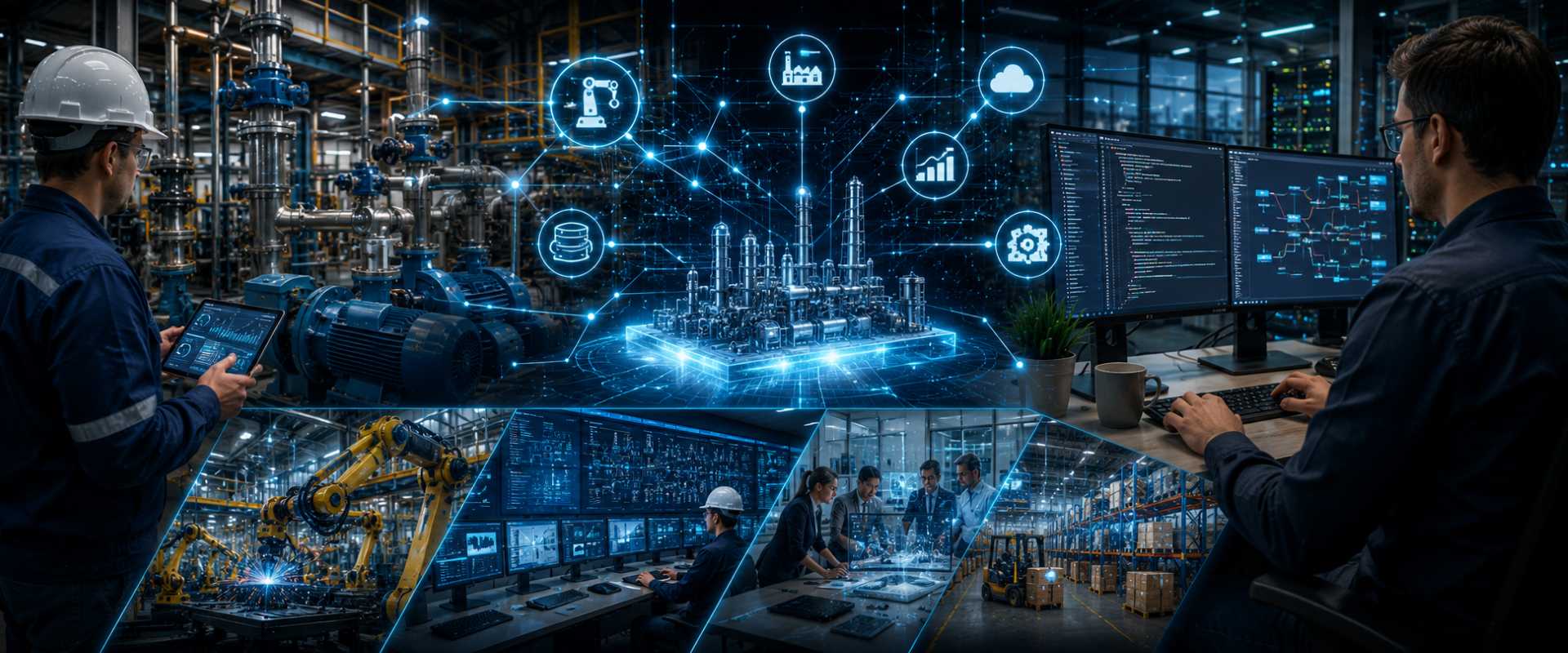
For decades, manufacturing performance improvements were driven primarily by physical assets. Organizations increased production by adding larger pumps, upgrading instrumentation, or expanding production lines. The assumption was straightforward: better machines would produce better outcomes.
Today, this approach is changing rapidly.
Modern manufacturing environments are increasingly software-defined ecosystems where industrial equipment, control systems, enterprise applications, analytics platforms, and operational intelligence work together as a connected architecture.
The most competitive organizations are not necessarily deploying more equipment. They are building smarter, more integrated systems powered by Industrial Automation Software Development.
As industries embrace digital transformation, software architecture has become one of the most important strategic investments for manufacturers seeking scalability, efficiency, and long-term operational success.
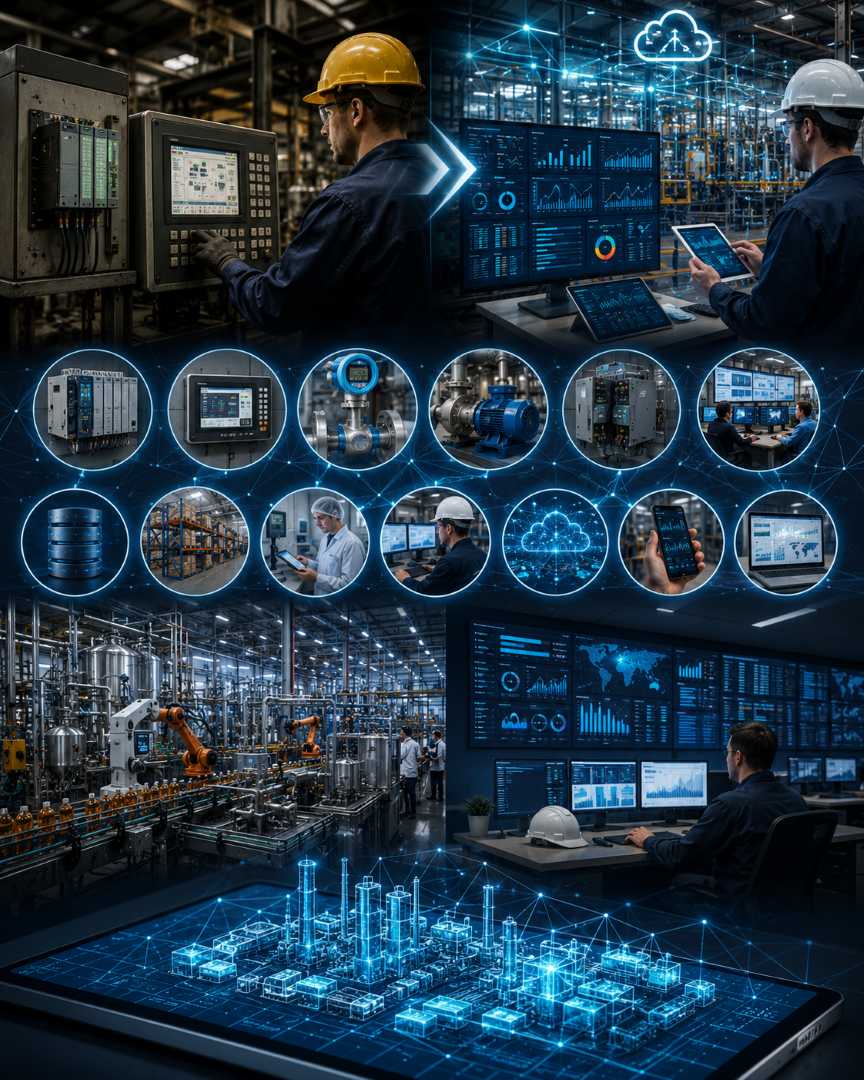
The Evolution from Machine-Centric to Software-Centric Manufacturing
Traditional industrial automation was built around a simple hierarchy:
PLC → HMI → Operator
The PLC controlled equipment, the HMI displayed system information, and operators made operational decisions.
This model served manufacturers effectively for many years.
However, modern facilities operate in a much more connected environment where multiple systems must exchange information continuously.
A typical manufacturing plant may include:
- PLCs and embedded controllers
- Human Machine Interfaces (HMIs)
- Flow meters and sensors
- Pumps and variable frequency drives
- SCADA systems
- ERP platforms
- Inventory and warehouse systems
- Quality management software
- Maintenance management applications
- Cloud platforms
- Mobile applications
- Business intelligence dashboards
While each system performs its own function efficiently, the challenge lies in integrating them into a unified operational framework.
This is where Manufacturing Software Architecture becomes critical.
-
Why Modern Factories Behave Like Distributed Software Systems
Manufacturing today extends far beyond machine control.
Consider a liquid dispensing process:
- A customer order initiates production.
- A recipe engine determines ingredient requirements.
- Inventory systems verify material availability.
- Pumps transfer ingredients.
- Flow meters validate consumption.
- PLCs execute control sequences.
- Quality systems record production data.
- ERP systems update inventory records.
- Analytics dashboards provide operational insights.
Although this appears to be a manufacturing process, it is actually a distributed software workflow interacting with physical equipment.
The machines are only one part of the architecture.
The real value comes from the software systems coordinating operations across the enterprise.
Organizations that recognize this shift gain greater flexibility, scalability, and operational visibility.
-
The Hidden Challenge Inside Liquid-Based Manufacturing Systems
Liquid dispensing, batching, and process manufacturing systems are becoming increasingly software-driven.
Many companies initially assume these systems are primarily mechanical challenges.
In reality, software often determines operational success.
Consider a multi-ingredient dispensing platform.
Each ingredient behaves differently based on:
- Viscosity
- Temperature
- Pressure
- Flow characteristics
- Container geometry
- Pump performance
- Valve timing
Now multiply these variables across thousands of transactions every day.
Each dispensing event affects:
- Inventory management
- Production costs
- Recipe compliance
- Quality records
- Maintenance schedules
- Regulatory traceability
The challenge is not simply controlling valves and pumps.
The challenge is synchronizing physical processes with digital operational systems.
That synchronization is made possible through Industrial Control Software.
-
The Rise of Event-Driven Manufacturing
Modern factories are increasingly adopting event-driven architectures.
Historically, industrial applications relied on polling, where systems continuously asked devices for status updates.
This approach works but introduces limitations.
Event-driven architectures operate differently.
Instead of asking what happened, systems automatically communicate events such as:
- Batch Started
- Ingredient Dispensed
- Production Run Completed
- Tank Refill Finished
- Equipment Fault Detected
- Maintenance Threshold Exceeded
- Recipe Executed
This architectural approach provides:
- Faster response times
- Reduced system complexity
- Improved scalability
- Better traceability
- Simplified integrations
Most importantly, event-driven systems create the foundation for operational intelligence and future AI initiatives.
-
Why Edge Computing Is Becoming Essential
Many organizations initially believe cloud computing can manage all industrial operations.
While cloud platforms provide significant advantages, critical manufacturing functions require local processing.
Examples include:
- Flow verification
- Pump sequencing
- Valve control
- Batch execution
- Safety interlocks
- Dispense validation
These operations demand low-latency execution and high reliability.
A network interruption should never stop production.
This is why Edge Computing Manufacturing architectures have become increasingly important.
A modern industrial architecture often follows this structure:
Physical Assets
↓
PLC Layer
↓
Edge Intelligence Layer
↓
Operational Event Bus
↓
Enterprise Applications
↓
Analytics and AI
The edge layer acts as the operational brain connecting industrial equipment with enterprise systems.
This architecture delivers both reliability and scalability.
-
The Real Purpose of Industrial Automation Software Development
Many automation discussions begin with technology questions:
- Which PLC should we use?
- Which cloud platform is best?
- Which dashboard should we implement?
While these decisions matter, they are not the primary objective.
Industrial Automation Software Development is not simply about creating software.
Its purpose is to create operational alignment between:
- Physical manufacturing processes
- Human workflows
- Enterprise business systems
- Operational intelligence platforms
When these systems operate independently, organizations experience:
- Inventory discrepancies
- Reporting inconsistencies
- Limited operational visibility
- Excessive manual work
- Quality challenges
When systems operate together, operational performance improves significantly.
-
Why Many AI Initiatives Fail
Artificial Intelligence has become a major focus within manufacturing.
However, many organizations attempt to implement AI before establishing the required operational foundation.
AI depends on data.
Data depends on architecture.
Poor architecture creates unreliable data.
Unreliable data produces ineffective AI models.
Before implementing predictive maintenance or intelligent forecasting, manufacturers should ask:
- Can operational events be captured consistently?
- Is production data accurate and contextualized?
- Can systems communicate reliably?
- Is historical data trustworthy?
Without these capabilities, AI projects often fail to deliver expected results.
AI readiness begins with a strong Industrial IoT Architecture.
-
The Software-Defined Factory Framework
The most successful manufacturing organizations are increasingly adopting a six-layer architecture.
Layer 1: Physical Assets
- Pumps
- Valves
- Sensors
- Flow meters
- Drives
- Production equipment
Layer 2: Control Systems
- PLCs
- Embedded controllers
- Industrial networking
Layer 3: Edge Intelligence
- Local processing
- Event generation
- Validation
- Operational orchestration
Layer 4: Operational Data Layer
- Event history
- Production records
- Operational context
Layer 5: Enterprise Integration
- ERP systems
- MES platforms
- CRM software
- Inventory systems
- Maintenance applications
Layer 6: Decision Intelligence
- Analytics
- Forecasting
- Optimization
- Artificial Intelligence
Together, these layers form the foundation of the Software-Defined Factory.
-
Questions Engineering Leaders Should Be Asking
As manufacturing becomes more connected, technology leaders should focus on architecture rather than individual components.
Important questions include:
- Can the system scale across multiple facilities?
- Can operational events be shared across business systems?
- Can production data support future AI initiatives?
- Can physical process behavior become actionable business intelligence?
- Is the architecture prepared for long-term digital transformation?
The answers to these questions increasingly determine operational success.
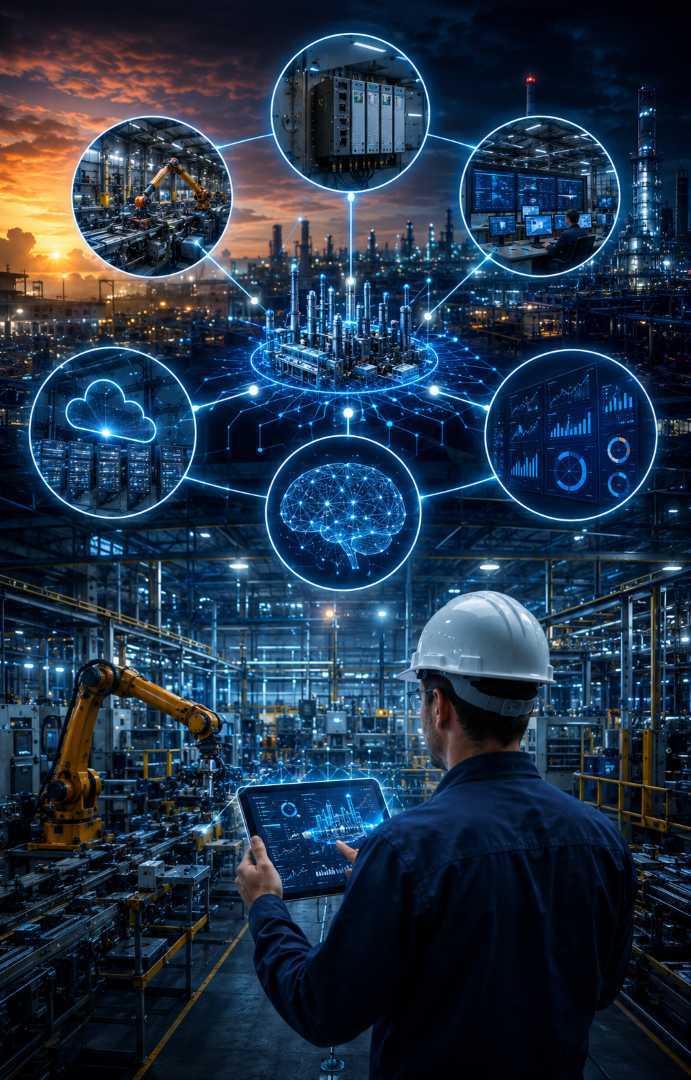
The Future Belongs to Software-Defined Operations
The next generation of manufacturing leaders will not be defined by how many sensors or machines they deploy.
They will be defined by how effectively they architect software around physical operations.
Future factories will operate as intelligent ecosystems where:
- Industrial controls
- Operational data
- Enterprise systems
- Analytics platforms
- Artificial intelligence
work together as a unified operational environment.
Organizations embracing this transformation today will gain greater agility, stronger scalability, and a sustainable competitive advantage.
Conclusion
Industrial automation is no longer solely about controlling machines.
It is about designing the digital architecture that enables modern operations to thrive.
By combining Industrial Automation Software Development, Industrial IoT Architecture, Edge Computing Manufacturing, and intelligent enterprise integrations, manufacturers can build scalable, resilient, and future-ready operations.
At Seashore Solutions, we help organizations bridge the gap between physical processes and digital systems through innovative automation architectures, industrial IoT solutions, enterprise integrations, and operational intelligence platforms that drive measurable business value.
About Seashore Solutions
Seashore Solutions specializes in Industrial Automation Software Development, Industrial IoT, PLC integration, liquid management systems, enterprise software integration, and operational intelligence platforms.
Our engineering teams design scalable architectures that connect physical operations with modern digital technologies helping organizations improve efficiency, increase visibility, and prepare for the future of manufacturing.