
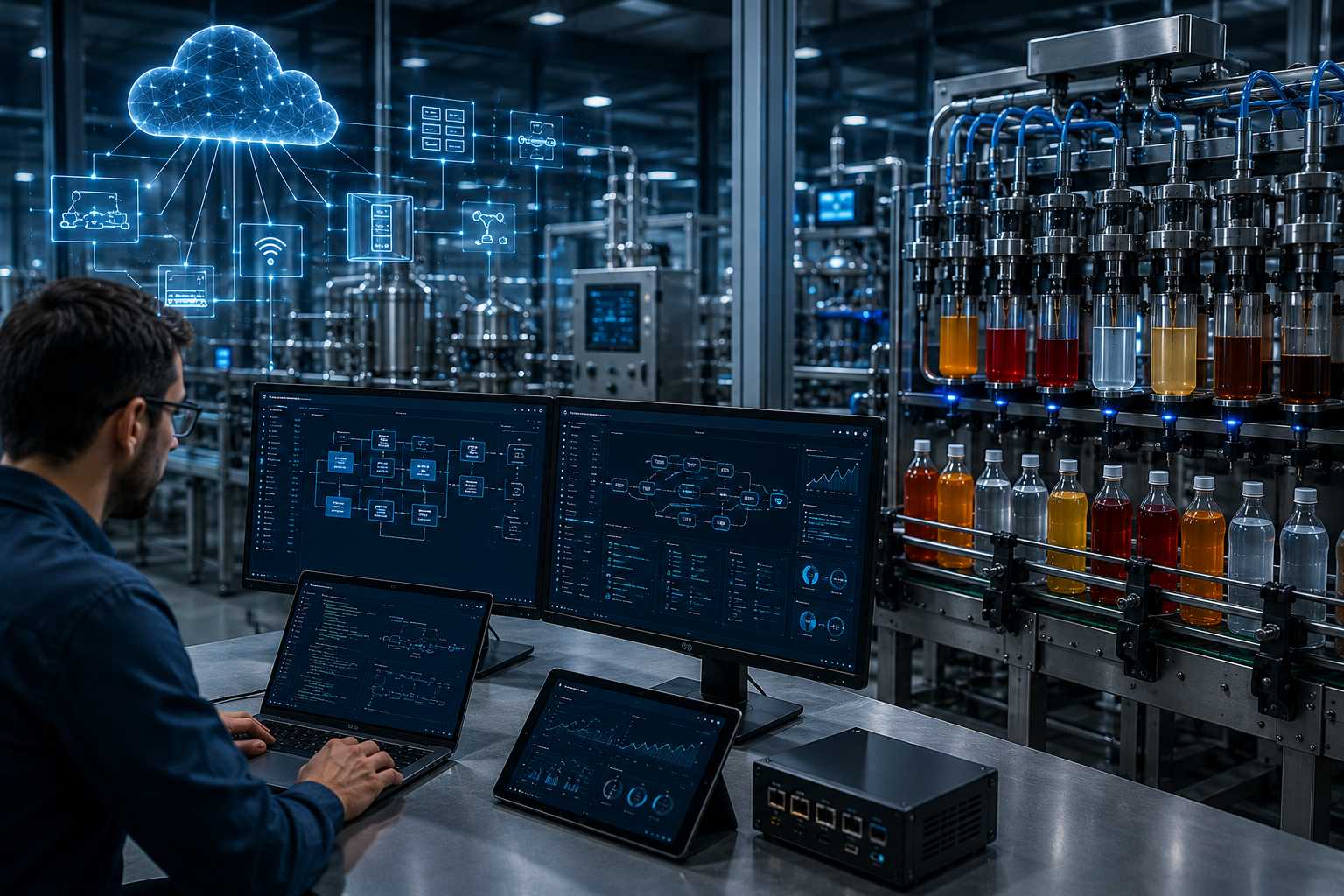
When discussing innovation in the food and beverage industry, attention often centers on hardware components such as dispensing valves, pumps, flow meters, refrigeration units, and touchscreen interfaces. While these components are essential, they represent only one side of the equation.
The true foundation of a successful automated beverage system is its software architecture.
Modern beverage automation software must coordinate multiple functions simultaneously while maintaining speed, reliability, and precision. From real-time fluid control and recipe execution to inventory tracking, payment processing, cloud connectivity, and enterprise reporting, the software layer determines how efficiently the entire platform performs.
For high-volume beverage dispensing environments processing thousands of transactions daily, a scalable and well-structured software architecture is not optional it is essential.
At Seashore Solutions, we develop intelligent software platforms for beverage automation systems that combine industrial controls, IoT technologies, cloud infrastructure, and enterprise integrations to create scalable and reliable dispensing ecosystems.
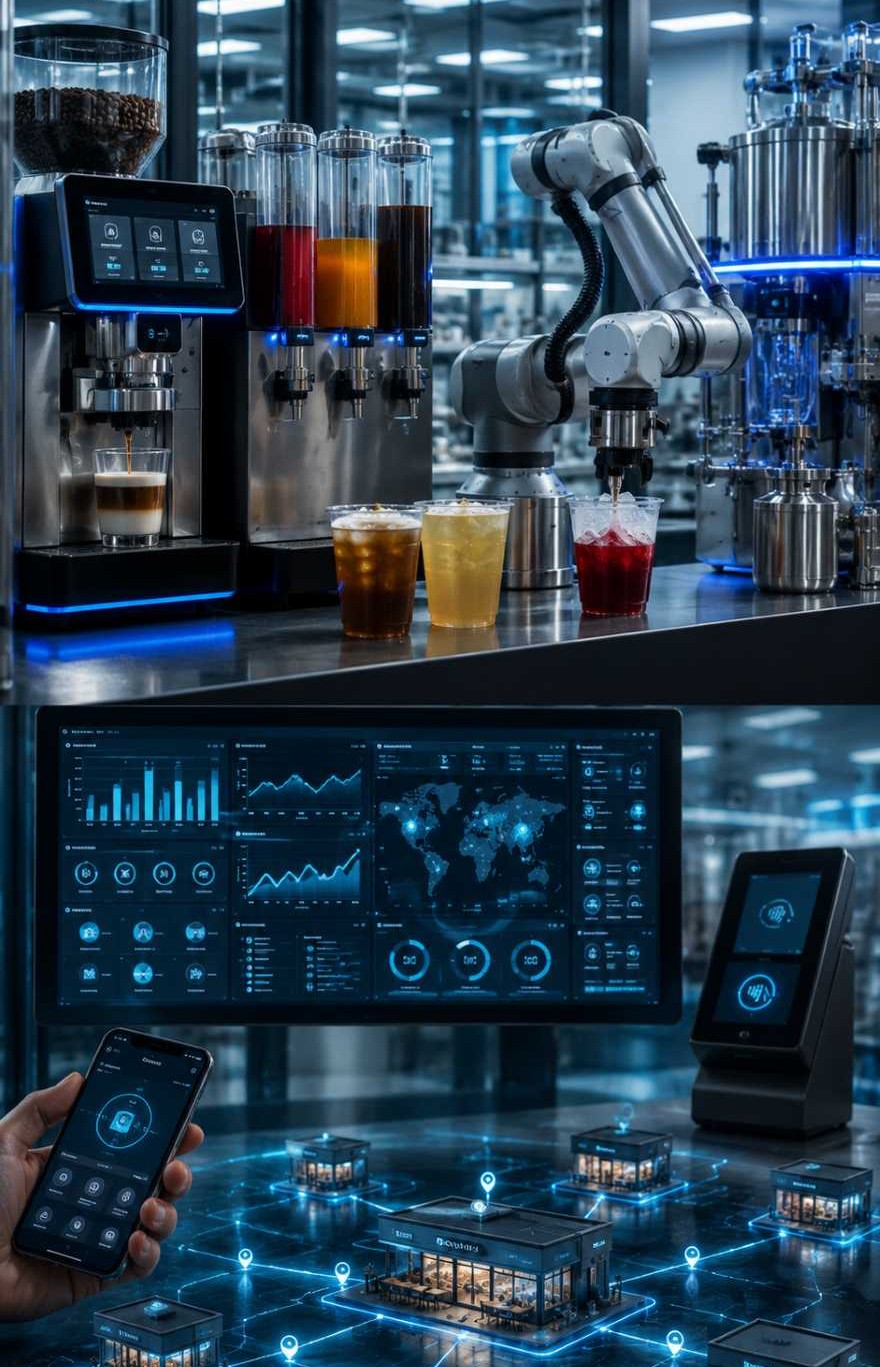
Why Software Architecture Matters in Beverage Automation
A modern beverage platform is much more than a dispensing machine. It is an interconnected ecosystem responsible for:
- Real-time fluid control
- Beverage recipe execution
- Ingredient inventory tracking
- POS and payment integrations
- User authentication and permissions
- Equipment health monitoring
- Regulatory reporting
- Multi-location deployment and management
Attempting to manage these functions through isolated applications often creates complexity, maintenance challenges, and operational inefficiencies.
The most successful systems are designed around a layered software architecture that separates responsibilities while allowing seamless communication across the platform.
-
Device Control Layer
The device control layer forms the foundation of any beverage dispensing software platform.
This layer directly communicates with:
- Flow sensors
- Pumps
- Solenoid valves
- Pressure monitoring systems
- Refrigeration units
- PLCs
- Embedded controllers
A common engineering mistake is allowing cloud applications to directly control beverage dispensing operations.
Instead, the dispensing logic should reside locally through edge computing systems capable of:
- Executing beverage recipes
- Managing dispensing sequences
- Monitoring equipment health
- Handling safety interlocks
- Continuing operations during internet outages
Why Edge Computing Matters
Edge computing provides:
- Lower latency
- Faster response times
- Increased reliability
- Reduced dependency on cloud connectivity
- Improved operational safety
For high-volume dispensing systems, local control significantly improves consistency and uptime.
-
Recipe Execution Engine
The recipe execution engine acts as the operational brain of the beverage platform.
Every beverage transaction requires the system to:
- Validate user permissions
- Verify ingredient availability
- Calculate ingredient quantities
- Execute dispensing sequences
- Capture operational telemetry
- Generate audit logs
One of the most important architectural decisions is treating recipes as configurable objects rather than hard-coded software logic.
This approach enables operators to:
- Introduce new beverages quickly
- Modify recipes without software releases
- Maintain version control
- Roll back configurations when necessary
- Standardize recipes across multiple locations
Modern recipe management software provides the flexibility needed to adapt rapidly to changing consumer preferences.
-
Integration Services
Most beverage businesses already operate with multiple software platforms.
Common integrations include:
- POS systems
- Loyalty applications
- Inventory management software
- ERP systems
- Accounting platforms
- Mobile ordering applications
- Third-party payment gateways
This is where the integration layer becomes essential.
Modern food and beverage software development focuses heavily on interoperability through:
- APIs allow different applications to communicate securely and exchange operational data in real time.
- Webhooks automatically notify connected systems when specific events occur, such as completed transactions or inventory changes.
- Event-driven architectures provide real-time operational visibility and support advanced analytics applications.
- Authentication frameworks ensure only authorized users and systems can access sensitive operational data.
An effective integration strategy creates a connected ecosystem where data flows seamlessly throughout the organization.
-
Operational Analytics
High-volume beverage systems generate enormous amounts of operational data.
Typical data points include:
- Beverage dispensing transactions
- Ingredient consumption
- Equipment utilization rates
- Downtime events
- Operator activity
- Inventory movement
- System performance metrics
The value of this data lies in the insights it provides.
Advanced analytics platforms help operators identify:
- Detecting discrepancies between expected and actual ingredient consumption.
- Understanding customer behavior to optimize staffing and production.
- Identifying underperforming machines and improving throughput.
- Reducing manual processes and improving workforce efficiency.
Successful operators design analytics into their beverage automation software from the beginning rather than treating it as an optional feature.
-
Enterprise Management
As beverage businesses expand, centralized management becomes increasingly important.
Enterprise management platforms should provide:
- Multi-location visibility
- Remote device monitoring
- Centralized configuration management
- Software deployment controls
- Security auditing
- User role management
- Maintenance scheduling
Without centralized oversight, managing multiple beverage locations can become expensive and operationally complex.
A robust cloud beverage platform enables operators to maintain consistency while scaling their operations efficiently.
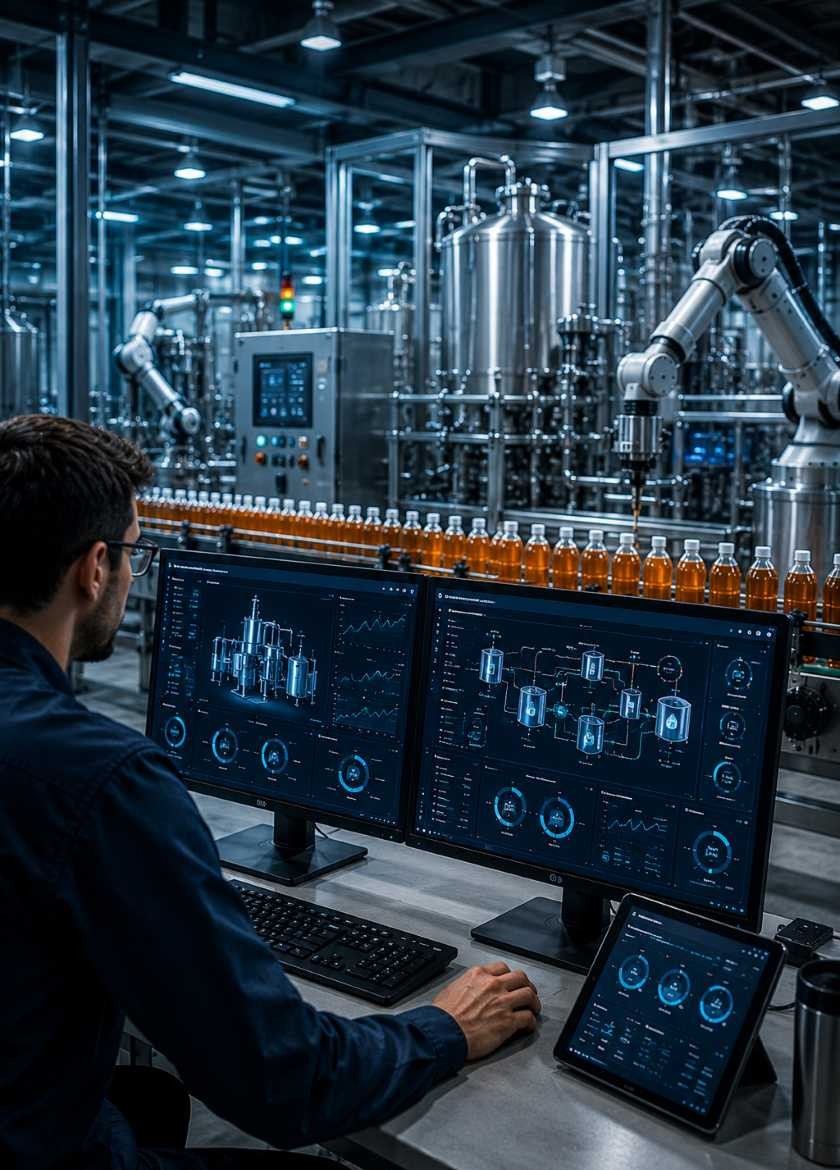
The Role of Industrial Automation Software
Beverage automation increasingly relies on principles borrowed from industrial manufacturing environments.
Modern industrial automation software enables:
- Real-time equipment monitoring
- Predictive maintenance
- Industrial IoT connectivity
- Automated workflows
- Remote diagnostics
- Secure device communication
These capabilities improve uptime, reduce operating costs, and enhance product consistency across beverage operations.
As automation technologies continue to evolve, beverage companies are increasingly adopting industrial-grade software architectures to remain competitive.
Future Trends in Beverage Automation
The next generation of automated beverage systems will be shaped by several emerging technologies:
-
Artificial Intelligence
AI-powered systems will optimize recipes, predict equipment failures, and improve operational efficiency.
-
Industrial IoT
Connected sensors will provide deeper visibility into equipment performance and ingredient usage.
-
Edge Computing
More processing power will move closer to dispensing equipment, reducing latency and improving reliability.
-
Cloud-Native Platforms
Scalable cloud architectures will simplify enterprise deployments and global operations.
-
Predictive Analytics
Advanced analytics engines will help operators make proactive business decisions based on real-time data.
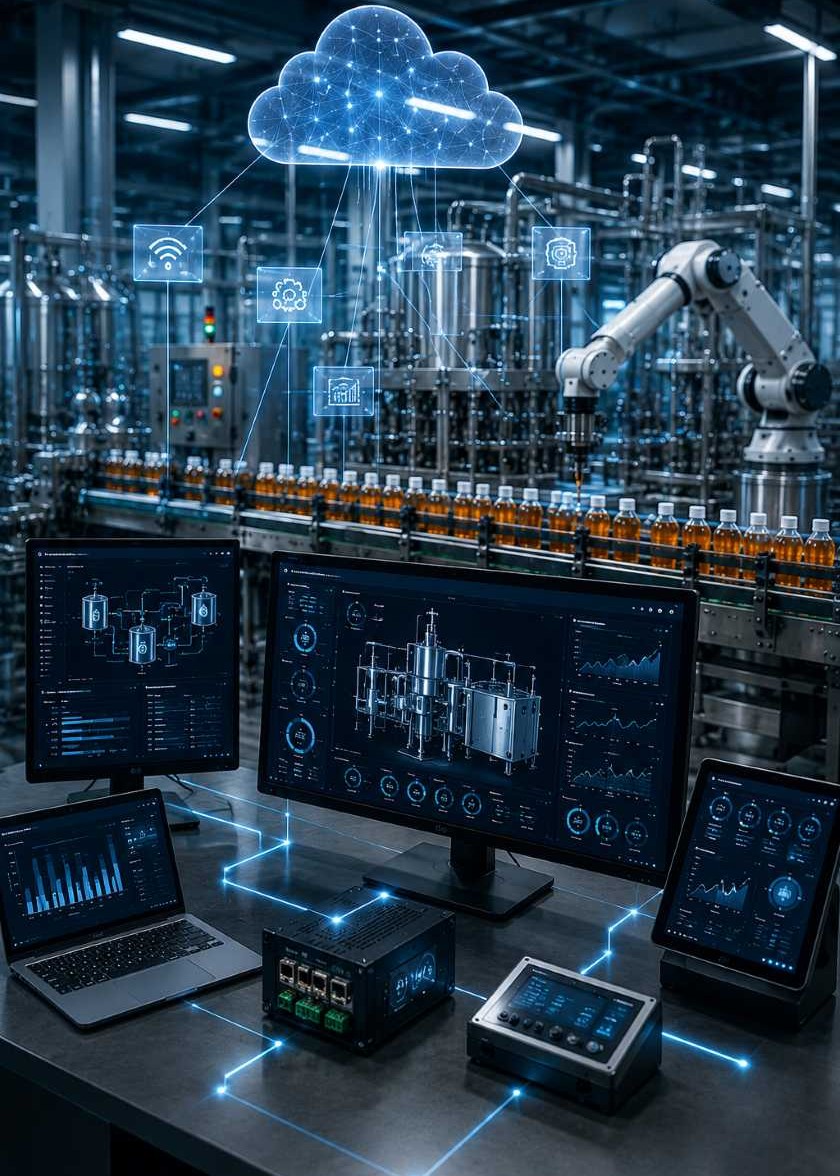
Key Engineering Takeaway
The future of beverage automation is not defined solely by dispensing hardware.
The most successful systems combine:
- Industrial controls
- Edge computing
- Cloud software
- Recipe management
- Enterprise integrations
- Real-time analytics
- Industrial IoT technologies
Organizations that build platforms around these architectural principles gain significant advantages in scalability, maintainability, operational efficiency, and long-term growth.
As beverage technology continues to evolve, investing in robust and scalable beverage automation software will be a key differentiator for companies seeking to deliver consistent customer experiences while operating at scale.
Conclusion
Designing a modern beverage automation platform requires far more than connecting pumps, valves, and touchscreens. It demands a carefully engineered software architecture capable of supporting real-time control, cloud connectivity, enterprise integrations, and data-driven decision-making.
Businesses that embrace scalable food manufacturing software solutions and intelligent beverage automation architectures are better positioned to improve efficiency, maintain quality, and adapt to future market demands.
At Seashore Solutions, we help organizations engineer advanced beverage automation systems that combine industrial controls, software engineering expertise, and cloud technologies to create reliable, scalable, and future-ready dispensing platforms.